
Coffee Packaging Materials Explained
This guide explains the most common coffee packaging materials—kraft paper, aluminum foil, plastic films, and multi-layer laminates—and how they impact freshness, cost, and branding. It helps you choose the right material for different coffee bag types like stand-up pouches, flat bottom bags, and side gusset bags.
3/27/20262 min read
What’s Really Keeping Your Beans Fresh?
Let’s be honest—coffee packaging isn’t exactly the main character when you think about great coffee. That honor usually goes to origin, roast level, or your fancy brewing gear. But here’s the plot twist: even the best beans can taste like cardboard if the packaging fails.
So today, we’re opening the (coffee) bag and diving into what coffee packaging is really made of—and why it matters more than you think.
☕ Why Packaging Materials Matter (Yes, It’s a Big Deal)
Coffee beans are surprisingly high-maintenance. They hate:
Oxygen (makes them stale)
Moisture (ruins flavor)
Light (degrades quality)
Heat (accelerates aging)
In other words, coffee beans are like vampires—keep them sealed, dry, and away from sunlight.
That’s where packaging materials come in. The right material acts like a superhero shield, protecting your beans from the outside world.
🛡️ The Most Common Coffee Packaging Materials
1. Kraft Paper (a.k.a. The “Eco-Friendly Hipster”)
What it is:
Natural-looking paper material, often brown and rustic.
Why people love it:
Looks organic and premium (hello, specialty coffee brands!)
Biodegradable outer layer
Great for branding and printing
But wait…
Paper alone is NOT enough to protect coffee
Usually combined with plastic or foil layers inside
Best for:
Self-standing pouches (stand-up bags) targeting eco-conscious customers.
2. Aluminum Foil (The “Freshness Bodyguard”
What it is:
A thin metallic layer inside the bag.
Why it’s awesome:
Excellent barrier against oxygen, moisture, and light
Keeps coffee fresh MUCH longer
Ideal for freshly roasted beans
Downside:
Not recyclable in most cases (sorry, planet 🌍)
Best for:
Flat bottom bags and side gusset bags where freshness is the top priority.
3. Plastic Films (The “Flexible All-Rounder”)
Common types:
PET (Polyethylene Terephthalate)
PE (Polyethylene)
BOPP (Biaxially Oriented Polypropylene)
Why they’re everywhere:
Flexible and lightweight
Cost-effective
Can be transparent (show off those beans!)
Weakness:
Lower barrier compared to foil (unless layered)
Best for:
Budget-friendly stand-up pouches or inner layers in laminated bags.
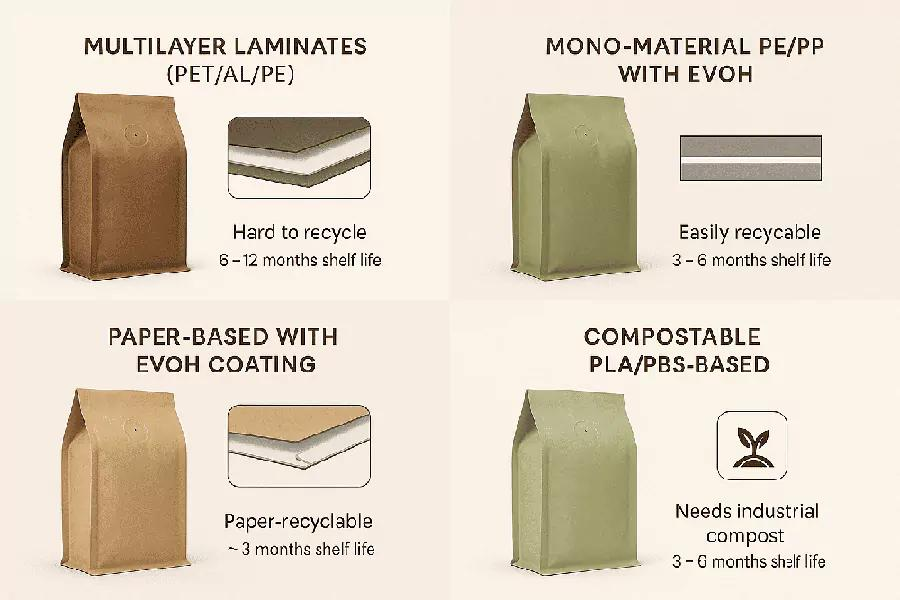
4. Multi-Layer Laminates (The “Ultimate Combo Meal”)
What it is:
A combination of materials (like Kraft + Aluminum + Plastic).
Why it’s king 👑:
Combines strength + barrier + appearance
Customizable depending on needs
The industry standard for premium coffee packaging
Typical structure:
Outer layer: Kraft or PET (for printing)
Middle layer: Aluminum foil (for protection)
Inner layer: PE (for sealing)
Best for:
ALL major formats:
Stand-up pouches
Flat bottom bags
Side gusset bags
🎯 Matching Materials with Bag Types
Here’s a quick cheat sheet so you don’t have to overthink it:
Bag Type Recommended Material :
Stand-Up Pouch : Kraft + PET + PE OR PET + PE
Flat Bottom Bag : PET + Aluminum + PE
Side Gusset Bag : Aluminum + PE (high barrier)
⚡ Bonus: Don’t Forget the One-Way Valve!
If your coffee is freshly roasted, it releases CO₂ (yes, your beans are literally breathing).
A one-way degassing valve:
Lets gas OUT
Keeps oxygen OUT
Prevents your bag from puffing up like a balloon 🎈
Conclusion: it’s small, but mighty.
🧠 Final Thoughts (Before Your Coffee Gets Cold)
Choosing coffee packaging materials isn’t just about looks—it’s about science, shelf life, and customer experience.
Want premium quality? → Go multi-layer with foil
Want eco vibes? → Use kraft + barrier lining
On a budget? → Plastic laminates can work
At the end of the day, great coffee deserves great protection. Otherwise, you’re basically putting gourmet beans in a sandwich bag… and nobody wants that.
Coffee Packaging Manufacturer
We specialize in manufacturing high-quality coffee packaging bags including stand up pouches, flat bottom bags, and recyclable coffee bags for coffee brands worldwide.
Request a Quote
© 2026 LX Packaging (huizhou) Co., Ltd All rights reserved.